La batalla contra el gusano barrenador sigue en México
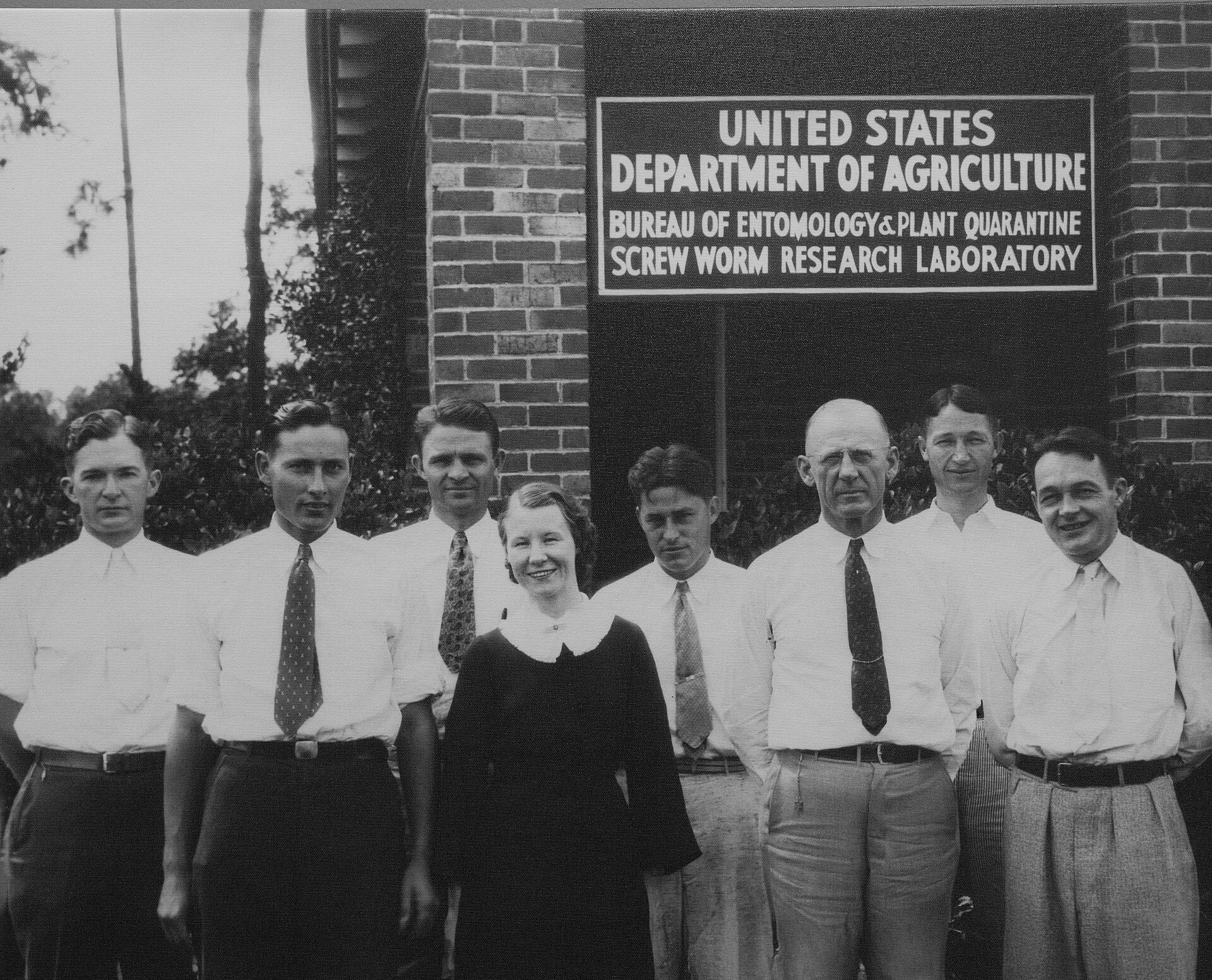
Historical photos of new world screwworm eradication research on display where U.S. Department of Agriculture (USDA) Secretary Brooke Rollins hosts a standing press conference from the newly opened Knipling-Bushland U.S. Livestock Insects Research Laboratory, in Kerrville, Texas to provide updates on the New World Screwworm, on June 9, 2026, .
Speakers included Texas Governor Greg Abbott, Animal and Plant Health Inspection Service Associate Administrator RDML Michael Schmoyer, Ph.D., Texas Animal Health Commission Executive Director Bud Dinges, Texas Parks and Wildlife Director of the Wildlife Division Alan Cane, USDA Under Secretary for Research, Education, and Economics (REE) and Chief Scientist Dr Scott Hutchins, and USDA Senior Advisor for New World Screwworm Preparedness John Bellinger. Joining them is the Knipling-Bushland U.S. Livestock Insects Research Laboratory Director Dr. Kim Lohmeyer.
Today U.S. Secretary of Agriculture Brooke L. Rollins announced President Donald J. Trump has appointed John Bellinger as the new Senior Advisor for New World Screwworm Preparedness. In this role, Bellinger will integrate into USDA’s team to help further drive its robust effort to explore all available technologies to combat the New World Screwworm.
With the advent of New World Screwworm cases discovered in the U.S., the Agriculture Department and its partners are in full response to contain and eradicate this threat to livestock, wildlife, and pets in detected areas - efforts that include communication of USDA's NWS Response Playbook and education of such to the public. Rod Bain provides details of the Playbook and response on the ground level in this edition of "Agriculture USA".
The United States Department of Agriculture’s (USDA) Agricultural Research Service (ARS) opened the Knipling-Bushland U.S. Livestock Insects Research Laboratory, a state-of-the-art laboratory facility today that will provide the U.S. cattle industry with innovative tools and advanced technologies to manage and eliminate the invasive fly and tick pests that threaten the U.S. cattle industry.
The new 52,000‑square‑foot laboratory features cutting‑edge laboratory spaces, advanced cattle facilities, and a state‑of‑the‑art genomics core to drive research that delivers innovative control technologies for the U.S. livestock industry. Other on-site research opportunities will involve improved surveillance and trapping tools, novel insecticides and acaricides, enhanced pesticide delivery techniques for cattle and wildlife, sustainable treatments to prevent and mitigate outbreaks of invasive/quarantine arthropod species, improved approaches to combat pesticide resistance, and insect genomics to identify pest vulnerabilities.
The facility also houses two ARS research units: the Livestock Arthropod Pest Research Unit and the Veterinary Pest Genetics Research Unit. Collectively, these units improve the health, sustainability, and profitability of U.S. livestock production and protect the U.S food supply from devastating arthropod pests, including biting flies, ticks, and the New World Screwworm. On-site research also plays a role in critical research to eradicate other ticks and blood feeding flies that can harm, infect, and kill cattle.
For more information see www.screwworm.gov and www.usda.gov
USDA media copies by Lance Cheung.
Después de casi un año con la frontera cerrada al comercio de ganado, Estados Unidos y México reabrieron parcialmente el paso de reses vivas entre ambos países. La medida llega tras meses de vigilancia y control de una plaga que ha preocupado a autoridades agrícolas de los dos lados de la frontera: el gusano barrenador del ganado.
Este insecto, cuya larva se alimenta literalmente de la carne viva de animales de granja y, en casos extremos, de personas, había provocado que Estados Unidos suspendiera las importaciones de bovinos mexicanos como medida preventiva. La plaga, que por décadas se consideró erradicada en gran parte de Norteamérica, resurgió en el sur de México y avanzó hacia el centro del país, generando alarma en la industria ganadera.
Aunque la reapertura parcial de la frontera es una buena noticia para productores y exportadores, especialistas advierten que el trabajo real apenas empieza. En distintas regiones de México se han instalado centros especializados dedicados a contener y eliminar la infestación, con estrategias que incluyen la liberación de moscas estériles para frenar la reproducción del parásito.
El reto es enorme: se trata de proteger tanto la salud animal como la economía de comunidades que dependen de la ganadería. Si quieres conocer a detalle cómo opera esta lucha desde dentro de las instalaciones mexicanas, te recomendamos leer la nota completa en The New York Times.